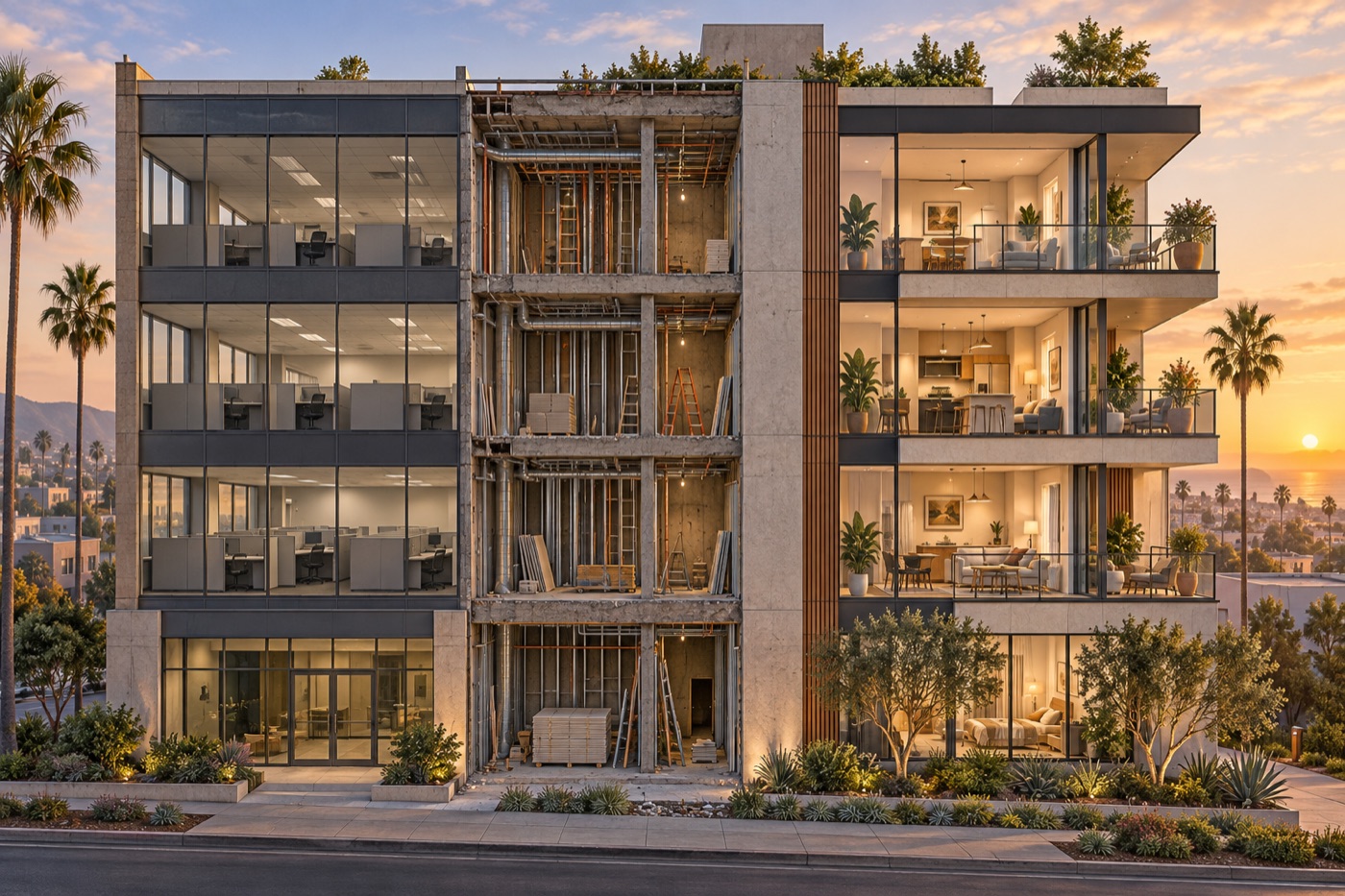
Drive past an office building after six in the evening and the idea seems almost obvious.
The parking lot is quiet. Floors of dark windows sit above valuable land. Meanwhile, people are struggling to find a home they can afford.
Why not turn the offices into housing?
Sometimes, that is exactly the right question. It is just not a simple project.
The proposal from Washington
The proposed Revitalizing Downtowns and Main Streets Act would create a federal tax credit covering 20% of qualifying costs for converting certain nonresidential buildings into residential or mixed-use property.
As of this article's publication date, the proposal has not become law.
The credit is meant to address one of adaptive reuse's biggest problems: cost. A building may already exist, but changing its purpose can require extensive structural, mechanical, electrical, plumbing, accessibility, and life-safety work.
Offices and homes are built around different lives
An office floor can be deep and wide, with much of its interior far from an exterior window. A home needs natural light, ventilation, privacy, kitchens, bathrooms, and safe residential exits. Plumbing may have been designed around a few central restrooms rather than dozens of individual units.
Then come the local questions:
- Is residential use permitted on the site?
- Can the structure meet current seismic and fire requirements?
- How will parking be handled?
- Is there enough water, sewer, power, and school capacity?
- Would the project include affordable units?
- What environmental review is required?
- Is conversion actually less expensive than redevelopment?
Some buildings will answer those questions well. Others will not.
Why the idea still deserves attention
Orange County does not have much spare land in its most established areas. Reusing a suitable building can place homes near jobs, roads, transit, shopping, and existing public services. It can also bring people and evening activity to a district that has become quiet as workplace patterns change.
There is something hopeful about giving a tired building a second life. A place designed for cubicles and conference rooms might become someone's first kitchen, a child's bedroom, or a small balcony where a resident drinks coffee before work.
But hope is not a feasibility study.
What nearby buyers and owners should watch
If you hear that an office property near a home is “becoming apartments,” look for the public record before treating it as certain.
Check the city's planning page and meeting agendas. Ask whether the proposal is only an idea, a filed application, an approved entitlement, or a project with building permits. Review the proposed height, unit count, access, parking, construction timeline, and public improvements.
For investors, the same discipline applies. A tax credit may improve a project's economics, but it does not cure a building that is physically unsuitable or a location with weak residential demand.
Office conversion can be part of Orange County's housing answer. The best projects will be the ones where the building, location, financing, and neighborhood plan genuinely fit—not simply the ones with an empty sign out front.
A property-specific next step
Policy can shape the market, but a good decision still belongs to the property and household in front of you. Raveena can help you organize the real-estate questions, compare documented property facts, and identify which questions belong with a tax adviser, attorney, lender, insurance professional, contractor, government agency, or other qualified expert.
Sources and further reading

Reviewed by Raveena Ashar
Orange County real estate professional · California DRE #01936601 · Rise Realty