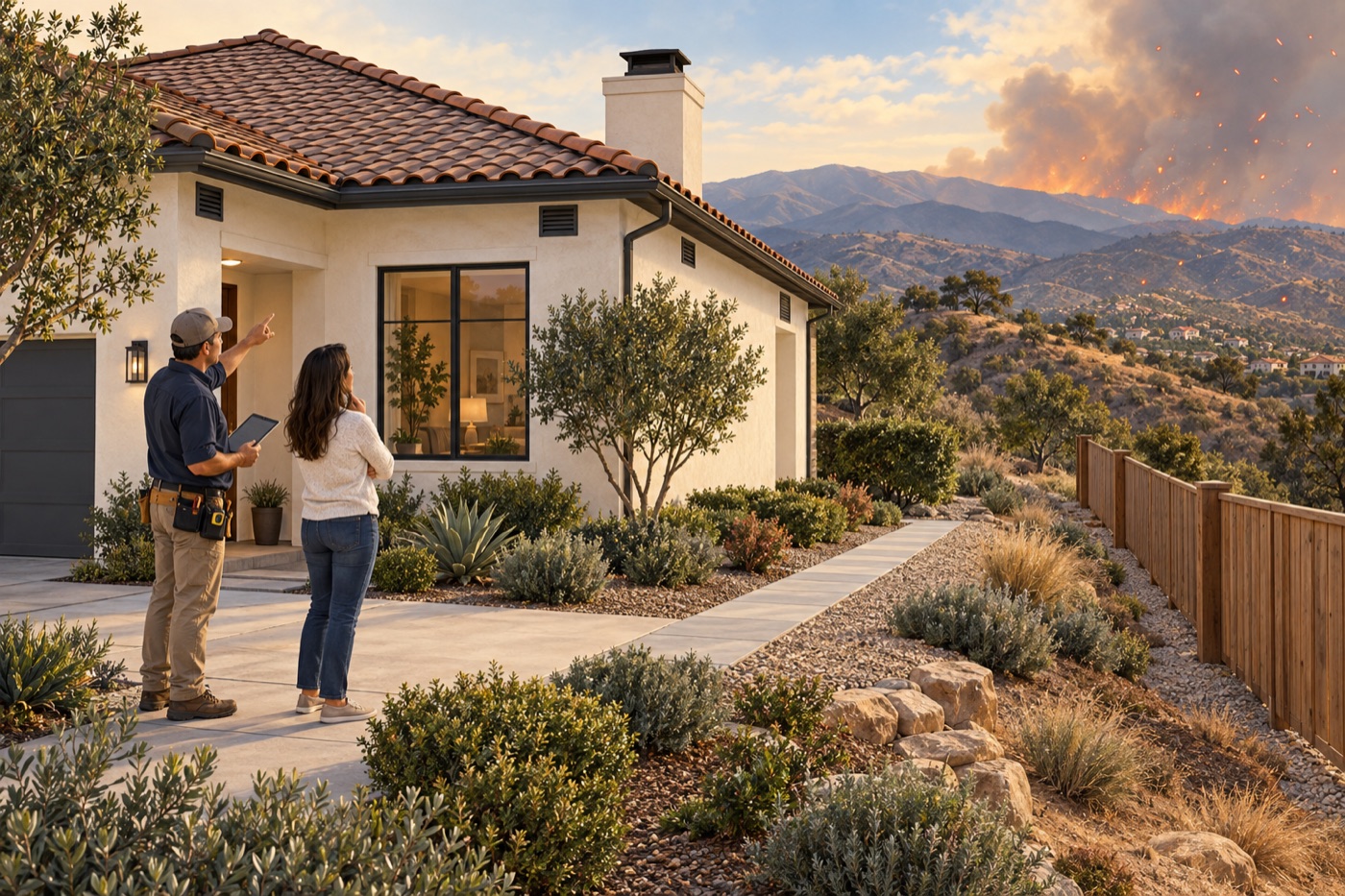
Wildfire preparation can be one of those projects homeowners know they should address but struggle to place on a calendar.
A roof, vents, fencing, landscaping, and exterior materials do not fail all at once. The costs arrive in pieces, while the benefit is something everyone hopes never has to test.
That is why proposed federal help has received attention from California real-estate advocates.
What has been proposed
The Disaster Resiliency and Coverage Act would establish support for qualifying household mitigation work in disaster-prone areas. California REALTORS® described the proposal during their 2026 Washington meetings as including grants of up to $10,000 per household and a 30% federal tax credit for eligible improvements.
Examples discussed include fire-resistant roofs, ember-resistant vents, and flood barriers.
The bill is a proposal, not a currently available federal benefit. Homeowners should not hire work on the assumption that a future grant or credit will reimburse it.
Home hardening is more than clearing brush
California's Safer from Wildfires framework identifies several features that can reduce vulnerability, including a Class A roof, ember- and fire-resistant vents, upgraded windows, and an ember-resistant area immediately around the structure.
The first five feet deserve special attention because embers can collect against walls, decks, fences, and landscaping. California has been developing “Zone 0” regulations for this space. As of September 2026, the Board of Forestry said the final regulation package was still under review, so owners should verify the rule and effective dates that apply to their property rather than relying on an old checklist or a neighbor's interpretation.
Why this belongs in a real-estate conversation
Safety comes first. Insurance and marketability follow close behind.
A buyer may ask about roof materials, vents, vegetation, access, prior claims, and insurance availability. A carrier may evaluate the property differently from the seller's existing insurer. A lender may require acceptable coverage before closing.
None of this means every foothill or canyon-area home is uninsurable. It means risk should be investigated early, calmly, and address by address.
For sellers, organized records can help. Keep invoices, permits, product information, inspection reports, and photographs of completed mitigation work. Do not promise that an improvement guarantees coverage or a particular premium. It may strengthen the home's risk profile without controlling an insurer's decision.
Where to begin without feeling overwhelmed
Start with a qualified inspection or assessment rather than a shopping list assembled online. Ask:
- Which risks are most important at this specific property?
- Which improvements are maintenance, and which require permits?
- Is the roof Class A rated?
- Are vents designed to resist ember entry?
- Does attached wood fencing create a path to the structure?
- What can be changed within the first five feet?
- Will an insurer recognize the work, and what documentation will it require?
Wildfire preparation is not glamorous. It is careful, sometimes dusty work. But a safer home, clearer records, and fewer surprises during a future sale are meaningful returns—even if a federal incentive never arrives.
A property-specific next step
Policy can shape the market, but a good decision still belongs to the property and household in front of you. Raveena can help you organize the real-estate questions, compare documented property facts, and identify which questions belong with a tax adviser, attorney, lender, insurance professional, contractor, government agency, or other qualified expert.
Sources and further reading

Reviewed by Raveena Ashar
Orange County real estate professional · California DRE #01936601 · Rise Realty