State rules are a starting point
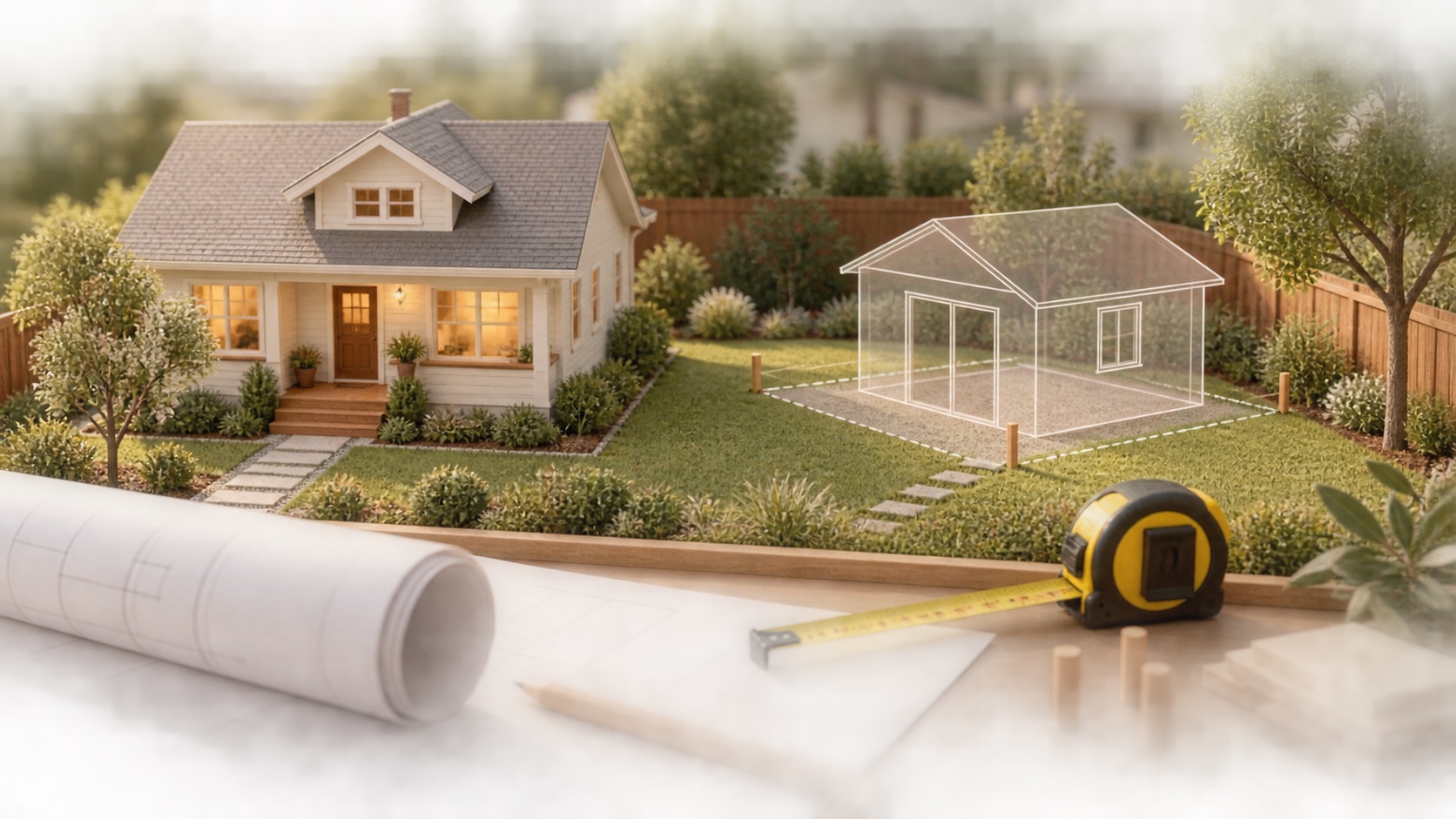
California's Department of Housing and Community Development updated its ADU Handbook in March 2026. It describes state law and changes in effect for 2026, but local processing and a particular lot still matter. A photograph of a large yard cannot establish that a proposed detached unit, conversion, or junior ADU meets the applicable requirements. Use the handbook to frame questions, not to replace a parcel-specific review.
Test the parcel before you price the dream
Request the home's permit history and any existing plans. With the local agency, check allowable ADU type and size, setbacks, height, access, utility connections, and site constraints. With licensed professionals, explore foundation, drainage, easements, sewer, electrical capacity, fire access, and construction cost. A design that fits on a sketch may still be expensive or impractical after engineering and utility work.
Separate permission from profitability
Even if an ADU can be approved, the total project budget includes design, permits, construction, financing, insurance, and ongoing maintenance. If rent is part of your decision, research lawful rental use and realistic local demand and vacancy. A lender may not count hoped-for future income the way you expect. Ask for its rules in writing rather than stretching your purchase budget around an unbuilt unit.
Write an ADU contingency checklist
Before removing relevant contract protections, identify which questions can be answered by the city and which require a professional feasibility study. A buyer may choose to pay for more analysis, renegotiate expectations, or decide the house must make sense without an ADU. In Irvine or any other California city, the address and proposed project—not a generic marketing phrase—determine the next step.
Quick answer
Does a listing's “ADU potential” mean the city approved one?
No. It is a marketing claim until the parcel, proposal, and permit status are verified with the local agency and qualified professionals.
Primary sources

Talk through a specific home with Raveena Ashar
Orange County real estate professional · California DRE #01936601 · Rise Realty